
Start with the business deadline
Separate a preferred delivery date from a firm operational need. Is the cargo replacing a failed component, completing a customer order or replenishing routine stock? Tell the freight team when the goods will actually be packed and ready, and whether the receiver has a fixed delivery window.
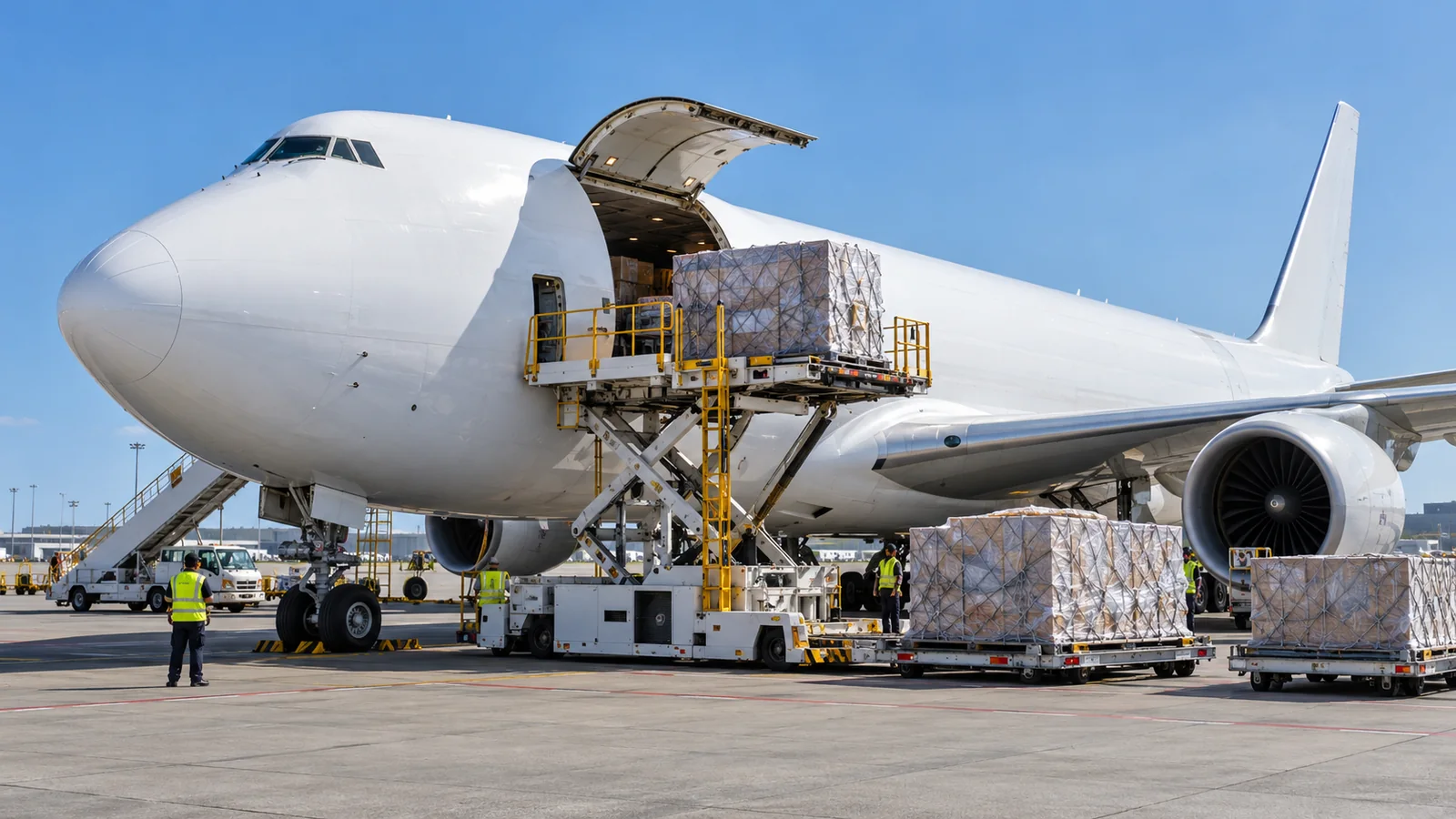
Air freight may suit a time-sensitive commercial shipment, but flight time alone is not door-to-door lead time. Collection, airport acceptance, documentation, customs processing and delivery still need coordination. Sea freight likewise requires time before loading and after vessel arrival. Ask for the full handover sequence rather than comparing only the main transport leg.
Understand weight and volume
Air cargo pricing commonly compares actual gross weight with a volumetric weight calculated under the applicable carrier rules. Bulky, lightweight packaging can therefore produce a chargeable weight above the scale weight. Provide final packed measurements rather than the dimensions of an unpacked product.
For ocean freight, LCL quotations may use an applicable weight/volume basis, while FCL planning considers a container and its associated charges. Do not compare an air rate per kilogram directly with a sea rate expressed on another basis. Ask the provider to translate the same shipment data into a complete quotation for each mode.
Check whether the cargo fits the mode
Dimensions, gross weight per piece, packaging and handling sensitivity can narrow the available choices. A large machine may need an equipment review before it can be proposed for an aircraft or container. A delicate assembly may need protection and instructions that remain useful through several transfers.
Batteries, chemicals, temperature-sensitive goods and other controlled commodities need early disclosure. Airline or shipping-line acceptance and specialist packing or declarations may apply. A general enquiry for air or sea freight is not confirmation that a particular commodity can travel on a proposed route. Avoid fixing a dispatch plan before those questions have been reviewed.
Compare total cost and the consequences of delay
Use matching quotation scopes: the same pickup and delivery points, cargo data and responsibilities. Review handling, inland legs and destination charges as well as main freight. A different Incoterms rule or named place can mean the quotations describe different obligations, even when their headline rates look comparable.
Then consider the business consequence of delay. Urgent components may justify a faster option if a receiving operation genuinely depends on them. Routine replenishment with adequate planning time may suit ocean freight. These are business trade-offs rather than universal rate rules; no fixed saving or transit guarantee should be inferred without a current quotation.
Consider a split shipment where practical
An illustrative manufacturer might need a small set of spares urgently while the remainder of a larger order can travel later. It could request an air option for the urgent pieces and a sea option for the balance. That requires separately identifiable packing, documents and receiving arrangements for both consignments.
A split movement can also add work and extra handovers. Check whether the shipment can be separated without disrupting assembly, warranty documentation or the receiving plan. Ask for each consignment's scope and costs before assuming that dividing the order will improve the overall outcome.
The customer's location does not determine the cargo route
A business in India may enquire about two overseas airports or ports, and an overseas customer may request an Indian import or export. Carglocal evaluates the actual cargo route with appropriate carriers, freight agents and providers. Cargo does not have to pass through India simply because our headquarters is in Chennai.
Availability depends on the commodity, timing, carrier acceptance and routing arrangements. Share alternatives if your business can use more than one arrival location or receiving date. A feasible option is established through enquiry and quotation, rather than assumed from an international service description.
Send information that supports a useful comparison
Carglocal can then seek suitable air or sea quotations for review. After the quotation and commercial terms are accepted, the team coordinates the agreed shipment and follows the relevant milestones.
- Commodity and any batteries, restricted materials or special handling needs.
- Packed dimensions and gross weight for every piece, plus package count.
- Origin, destination and the requested pickup/delivery scope.
- Cargo ready date and the reason for the delivery deadline.
- Agreed trade terms and whether a split movement could be considered.
Explore our air freight, sea freight and import and export coordination services for connected requirements.

